You’re Not Uncreative. You’ve Just Been Trained to Stop Imagining.
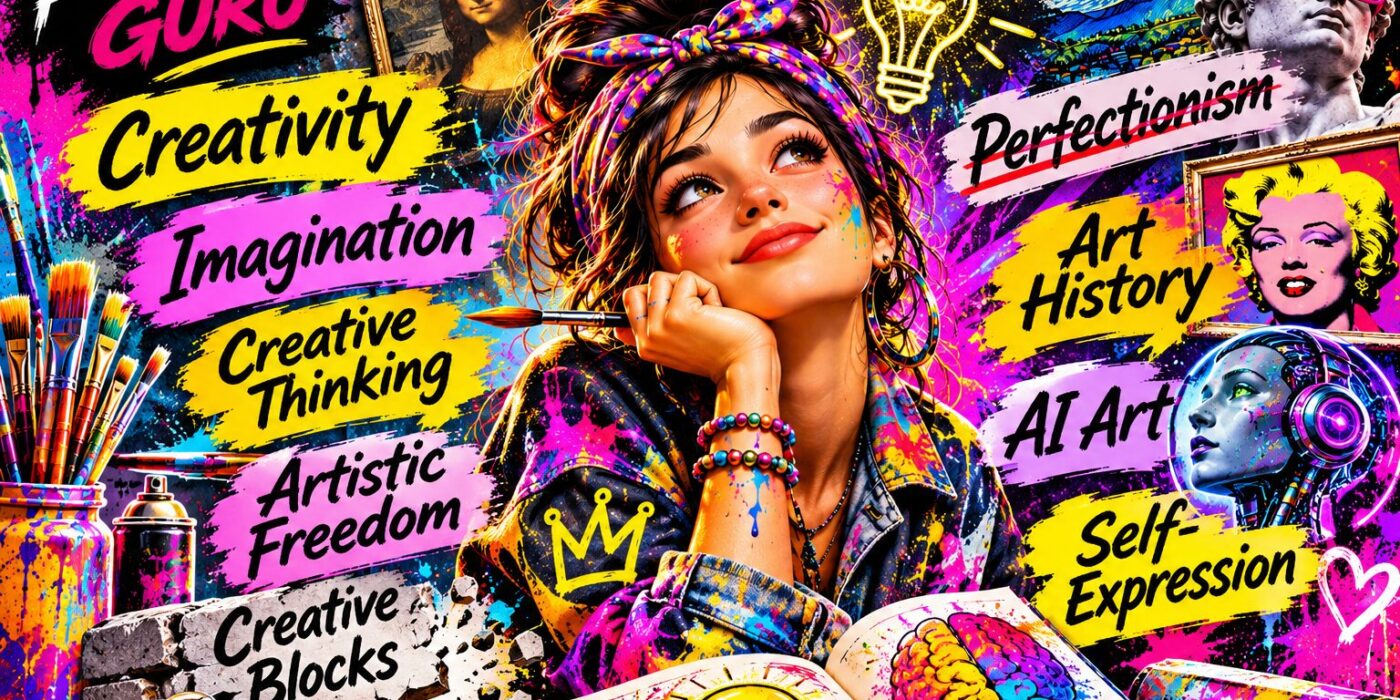
You’re Not Uncreative. You’ve Just Been Trained to Stop Imagining.
How perfectionism, conformity, and the fear of looking foolish silence our creative instincts—and how to get them back.
Somewhere between finger painting in kindergarten and becoming a responsible adult, something strange happened. We stopped creating just for the fun of it.
Remember when a cardboard box could become a spaceship? When clouds looked like dragons? When you could draw a purple elephant with six legs and nobody demanded an explanation?
You weren’t worried about artistic technique, marketability, or whether your masterpiece would get enough likes.
You just created.
Then came the rules.
Color inside the lines. Follow the instructions. Don’t make a mess. Be realistic. Get a real job. Stop daydreaming.
Eventually, many of us started believing the most creatively destructive sentence in the English language:
“I’m just not a creative person.”
But what if that’s not true?
What if your imagination hasn’t disappeared?
What if it’s simply been waiting for permission to come back out and play?
The Great Creativity Disappearing Act
Children don’t generally ask whether they’re qualified to imagine something.
They invent imaginary friends, create elaborate stories, build impossible structures, and turn ordinary objects into extraordinary adventures.
Adults, meanwhile, can spend twenty minutes deciding whether a social media post sounds stupid.
What changed?
Part of the answer is that we become more aware of expectations, social judgment, and the consequences of mistakes as we grow older.
We learn to evaluate our ideas before we’ve given them a chance to develop.
We compare our first attempts with someone else’s finished masterpieces.
And somewhere along the way, creativity becomes something we think other people possess.
Artists. Musicians. Designers. Writers. Geniuses.
Not us.
But creativity isn’t limited to painting a masterpiece or composing a symphony.
It’s finding a clever solution to a problem. Inventing a recipe. Rearranging a room. Making someone laugh. Starting a business. Telling a story. Seeing an opportunity everyone else overlooked.
Creativity is the ability to connect ideas, imagine alternatives, and make something new or meaningful.
You’ve probably been doing it your entire life without giving yourself credit.
Perfectionism: Creativity’s Well-Dressed Enemy
Perfectionism sounds respectable.
It suggests high standards, attention to detail, and a commitment to excellence.
But in the early stages of creating, perfectionism can become a surprisingly effective way to accomplish absolutely nothing.
The aspiring writer never finishes the first chapter.
The would-be painter never buys a canvas.
The entrepreneur keeps researching instead of launching.
The musician waits until the song is perfect before sharing it.
And the artist inside each of them slowly falls asleep.
Here’s the uncomfortable truth:
You cannot edit a masterpiece that doesn’t exist.
Your first attempt is allowed to be awkward.
Your first sketch can be terrible.
Your first song can sound like a washing machine falling down the stairs.
That’s not failure. That’s experimentation.
Great work often emerges through revision, discovery, and persistence—not instant perfection.
The goal is to create enough imperfect work that something interesting eventually happens.
“Your first masterpiece might be terrible. Make it anyway.” — Popstar Guru
The World’s Greatest Artists Were Professional Rule-Breakers
Art history isn’t just a parade of talented people producing beautiful objects.
It’s also a history of people challenging what everyone else considered normal.
Vincent van Gogh embraced expressive brushwork and intense color combinations that helped shape the development of modern painting.
Pablo Picasso helped pioneer Cubism, breaking familiar objects into fragmented viewpoints and challenging conventional representation.
Marcel Duchamp presented ordinary manufactured objects as art, forcing audiences to question whether artistic value comes from craftsmanship, context, intention, or ideas.
Andy Warhol transformed commercial imagery, celebrity portraits, and everyday consumer products into Pop Art.
Frida Kahlo used self-portraiture to explore identity, pain, personal experience, and symbolism in a deeply individual visual language.
Jean-Michel Basquiat brought together street culture, text, anatomy, history, and expressive mark-making in paintings that challenged artistic and social boundaries.
They weren’t all rebelling in the same way.
But each demonstrated something important:
Artistic progress often begins when someone questions an assumption that everyone else accepts.
Imagine telling Picasso that faces must always look realistic.
Or Warhol that soup cans don’t belong in a gallery.
Or Duchamp that a urinal could never provoke a serious discussion about art.
Fortunately, art doesn’t require unanimous approval.
Neither does your imagination.
Your Brain Is Not a Filing Cabinet
Most of us are trained to search for correct answers.
But creative thinking often begins with a different question:
What else could this be?
A brick could be a building material.
Or a doorstop.
Or a sculpture.
Or a metaphor for emotional baggage.
Or the first object in a ridiculous science-fiction story about a civilization that worships construction supplies.
The ability to generate multiple possibilities is often called divergent thinking.
It involves exploring alternatives rather than immediately narrowing everything down to one correct answer.
And it’s something you can practice.
Try this:
Look at a paperclip.
Now imagine ten unusual uses for it.
Then twenty.
Then fifty.
The first few answers might be obvious.
The interesting ones often appear when you stop trying to be sensible.
Maybe your paperclip becomes a miniature sculpture, a tiny musical instrument, or the antenna of an imaginary robot.
Congratulations.
You’re exercising your imagination.
No paintbrush required.
The Algorithm Doesn’t Know What Makes You Original
We live in a world overflowing with creative inspiration.
Millions of photographs, videos, songs, illustrations, designs, and AI-generated images compete for our attention.
That’s wonderful.
It’s also exhausting.
The more we consume, the easier it becomes to confuse inspiration with imitation.
We see what gets likes.
We notice what goes viral.
We observe which styles attract attention.
And before long, we may start creating what we think an audience wants instead of exploring what genuinely interests us.
Algorithms can be useful discovery tools, but their recommendations are not instructions for developing your artistic identity.
Your strangest interests might be your greatest creative advantage.
Maybe you love vintage science-fiction posters, Renaissance sculpture, Japanese architecture, underground music, and psychedelic typography.
Wonderful.
Mix them together.
Create something that doesn’t fit neatly into an existing category.
Originality doesn’t require inventing everything from nothing. It often comes from combining influences in ways that reflect your own perspective.
Your unusual combination of experiences, interests, memories, and obsessions is part of what makes your creative voice distinctive.
AI Can Generate Images. You Still Have to Generate Meaning.
Artificial intelligence has changed the creative landscape.
Today, someone with a laptop can generate illustrations, experiment with music, brainstorm stories, create animations, and explore visual concepts that once required specialized tools.
Does that mean human creativity is becoming obsolete?
Not necessarily.
AI can produce many possible outputs, but the human creator can still determine the purpose, direction, context, and meaning of the work.
You decide what matters.
You choose which ideas are worth exploring.
You bring memories, emotions, cultural experiences, intentions, and personal taste to the process.
AI can be a brainstorming partner, a sketching assistant, or a tool for exploring unexpected combinations.
But generating more images isn’t automatically the same thing as expressing more meaningful ideas.
The challenge is to use technology to expand your imagination rather than surrender your creative decisions to it.
Let AI help you explore possibilities. Don’t let it decide what you have to say.
Five Ways to Wake Up Your Imagination Today
You don’t need a retreat, an expensive course, or three uninterrupted hours of artistic inspiration.
Start with ten minutes.
1. Make Something Terrible on Purpose
Draw the world’s ugliest cat.
Write a ridiculous poem.
Invent a completely impractical product.
The objective is to remove the pressure to impress anyone.
Notice how much easier experimenting becomes when perfection isn’t invited.
2. Photograph the Ordinary
Take five photographs of objects you normally ignore.
A coffee cup. A shadow. A staircase. A crack in the sidewalk.
Change the angle, distance, framing, or lighting.
Try to make something familiar look unfamiliar.
Creativity often begins with attention.
3. Ask Ten Impossible Questions
What if houses could walk?
What if memories had colors?
What if museums displayed dreams?
What if music could be tasted?
What if your refrigerator became an art critic?
Write down ten absurd possibilities.
Choose your favorite and turn it into a drawing, story, collage, or AI-assisted concept.
4. Combine Three Unrelated Things
Pick three random objects.
For example:
A bicycle. A jellyfish. A grandfather clock.
Now invent something that combines all three.
A floating underwater time machine?
A clock-powered bicycle for sea creatures?
A mechanical jellyfish that delivers messages through time?
Don’t worry about practicality.
You’re practicing unexpected connections.
5. Create Before You Consume
Tomorrow morning, before scrolling through social media, spend five minutes making something.
Write a paragraph.
Sketch an idea.
Hum a melody.
Invent a character.
Create a funny caption.
Start your day as a creator rather than exclusively as a consumer.
You might be surprised by how differently the rest of your day feels.
Creativity Isn’t a Luxury. It’s a Way of Living.
Not everyone needs to become a professional artist.
You don’t have to sell paintings, publish novels, or build a creative business.
Sometimes creativity is simply a way of making everyday life more interesting.
It’s curiosity instead of autopilot.
Experimentation instead of rigid expectations.
Possibility instead of resignation.
And play instead of constant productivity.
The benefits aren’t limited to finished artwork.
Creative activities can offer enjoyment, self-expression, social connection, and opportunities to learn.
You can create for yourself.
You can create with friends.
You can make things nobody will ever see.
Not everything meaningful needs to be monetized, measured, or optimized.
Sometimes making something is its own reward.
Your Seven-Day Creative Rebellion Starts Here
If you’ve spent years telling yourself you’re not creative, don’t try to transform into a world-famous artist overnight.
Start smaller.
Give yourself seven days.
Seven short experiments.
Seven opportunities to notice something new.
Seven chances to create without judging the results.
That’s the idea behind The Creative Spark: 7 Days to Unleash Your Inner Artist, a free 24-page guide from Popstar Guru.
You’ll explore observation, imagination, artistic experimentation, creative play, and finding your own voice through practical daily challenges.
No artistic training required.
No expensive supplies.
Just 10–15 minutes a day and a willingness to try.
And when you’re ready to go further, The Art of Being Creative — Deluxe Creative Rebel Bundle offers a complete 171-page collection of guides, fillable worksheets, a 30-day imagination journal, creative challenge cards, AI prompts, and artistic inspiration.
The World Doesn’t Need Another Copy
Maybe you’ve never painted a picture worth framing.
Maybe you’ve never written a song.
Maybe your last serious artistic achievement involved macaroni glued to construction paper.
That’s fine.
Creativity isn’t a competition.
You don’t need to become Picasso, Warhol, or Van Gogh.
The world already had them.
The world hasn’t had your particular imagination yet.
So pick up a pencil.
Open a notebook.
Take a photograph.
Make a collage.
Invent something ridiculous.
Create something beautiful.
Create something ugly.
Create something nobody understands.
Just create.
Because the most interesting thing about your imagination isn’t what it has produced so far.
It’s what might happen when you finally give it room to play.
“You don’t become creative when you make great art. You become creative when you stop being afraid to make anything at all.” — Popstar Guru
Join the Creative Rebellion
🎨 Discover Popstar Guru: https://popstar.guru/
🎮 Play the Art Game: https://popstar.guru/game.html
✨ Follow @popstarguru: https://x.com/popstarguru
🪙 Explore the $POP Community: https://www.bonk.fun/token/58VobaTa8JKsuV1duzJBcoXrmSx4sQvQpD7DivvKbonk
No token purchase is required to participate in the creative challenges or enjoy Popstar Guru’s educational resources.